
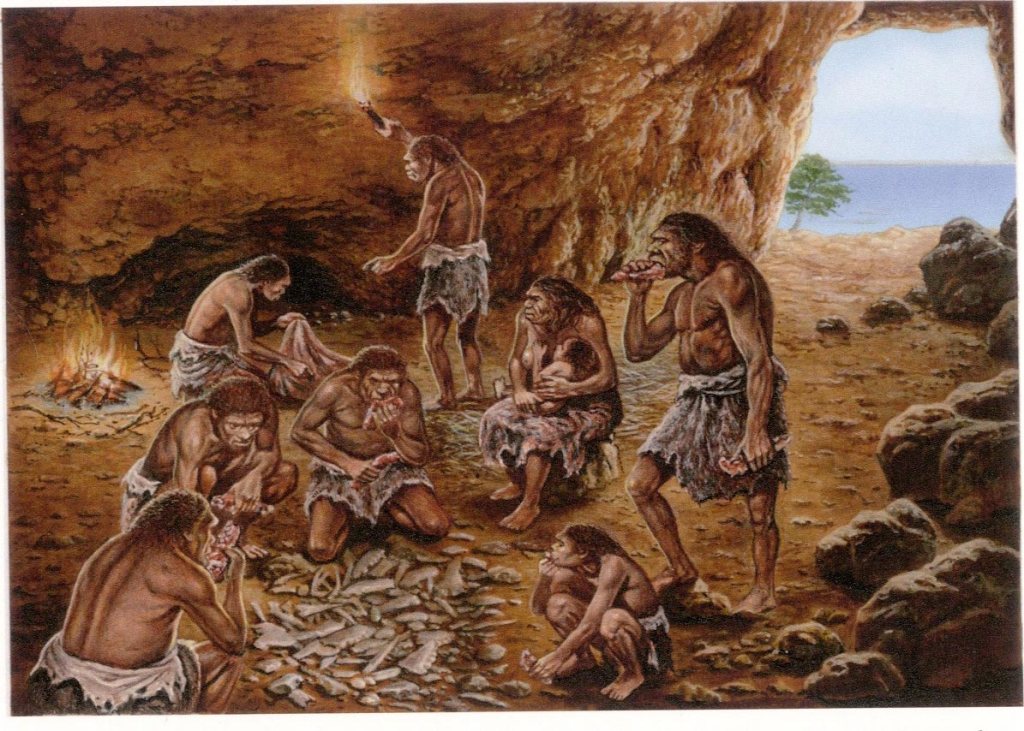
Have you ever jumped into a cold pool and felt every hair on your body stand up straight? It’s not just a reaction to the cold: have you ever gotten goosebumps when watching a scary movie? Did you wonder why?
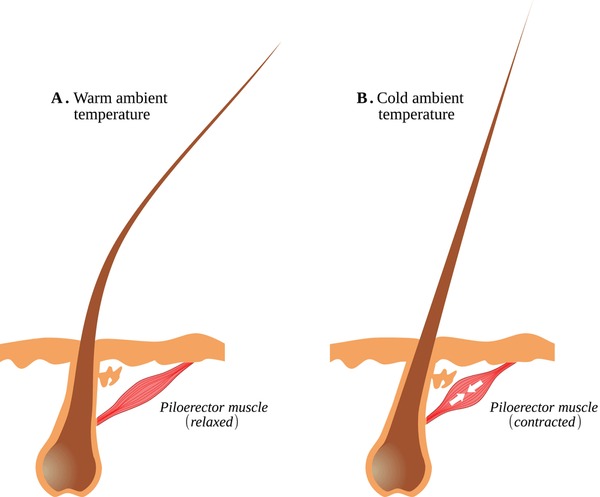
You may not have a need for them, but your ancestors did. When you get goosebumps, its because the small arrector pili muscles connected to each hair follicle contract, pulling the hair up. In our hairier ancestors, this increased the volume of air pockets in hair, fur, or even feathers, increasing insulation. the increased volume also made our ancestors appear bigger in fight or flight situations, adding to their intimidation factor.
Not enough time has passed since we were hunter-gatherers for this reflex to have been evolutionarily bred out of our DNA, so even though it’s meaningless to us today, in the past it helped us survive. Goosebumps are not the only body features that have outlived their usefulness to us; there are dozens of structures or behaviors that persist as reminders of what humans once had to endure on the daily. These body parts are grouped into a category called vestigial structures. Commonly known vestigial structures include wisdom teeth and body hair. Lesser known structures include the coccyx, a leftover from when our ancestors had tails.

The coccyx is what we refer to commonly as our tailbone. It is a fused segment of our spine, three or five vertebrae in length. Tails, to our primate ancestors, would have been useful for life in the trees. In animals, a tail could promote balance, self-defense, warmth, steering, or communication. The copious benefits to having a tail have made it a common addition to many creatures, but humans did not make the list. Our closest ancestors, apes, don’t have tails either. Roughly 25 million years ago, a genetic mutation in apes resulted in the loss of their tails, a key distinguishing feature between apes and monkeys. As a result, we do not have tails either, just a small, bony projection at the base of our spines where it once was. Despite its apparent uselessness, the coccyx has importance in our bodies. It gives structure to the pelvic floor, supporting the bladder, bowel, and uterus.
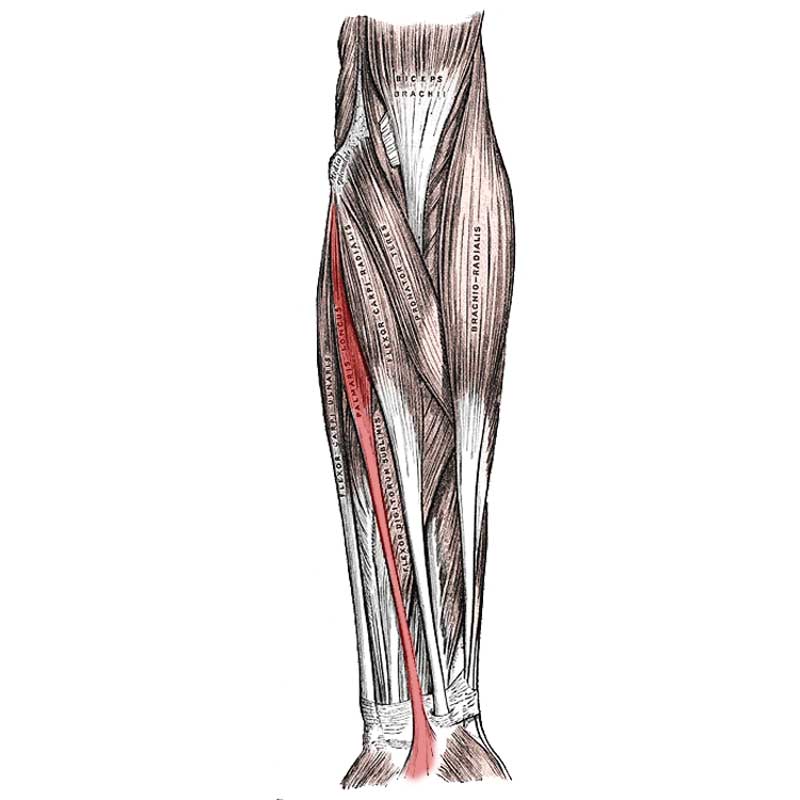
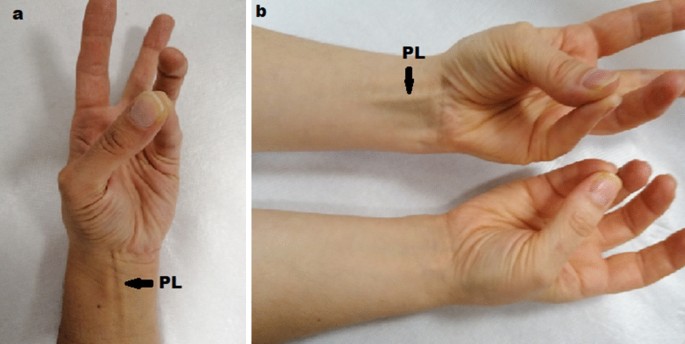
Although we don’t have tails to help us climb through trees, a majority of humans still have extra muscles for that purpose. The palmaris longus is a small, narrow muscle in the forearm. It is found in mammals that use their forelimbs to move around, but it’s presence is waning in humans. 10%-15% of people do not have the palmar longus muscle on either forearm. Press your pinky to your thumb and flex your wrist: if you see a prominent, raised line on one or both of your wrists then you belong to the 85% of people who have a palmaris longus. If you see no change, you belong to the 15%. It is no cause for alarm; the absence of the muscle does not effect your grip strength. It’s most useful application in today’s world is being repurposed during reconstructive or cosmetic surgeries.
These three features are examples of places where we humans have evolved faster than our bodies. We have taken ourselves from the forests to the cities. In general, we have made our lives much easier than they used to be. Our bodies don’t need to run, climb, or fight to keep us alive, but not that long ago our ancestors only survived because of the anatomical features we now take for granted.
 The Hominin Hiker
Leave a comment